
Science 4th grade | UNIT 3: Solids‚ liquids and gases 3.2 Matter is made of particles
A particle is a very small part of something.
Scientists can use a scientific model to explain how and why something happens. The particle model is a good way to explain the differences between solids, liquids and gases.
This model says that all matter is made up of particles. In real life, the particles in matter are too small to see. In the model we can show the particles as little balls.
The particles in matter are always moving, even in things that look still. The amount of movement of the particles decides whether something is a solid, liquid or gas.
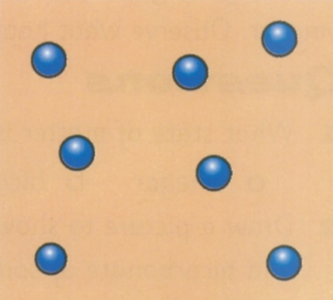
|
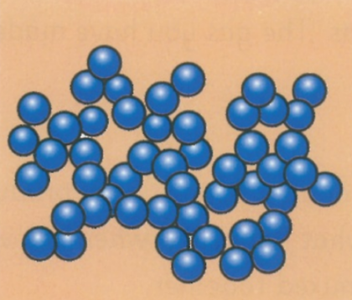
|
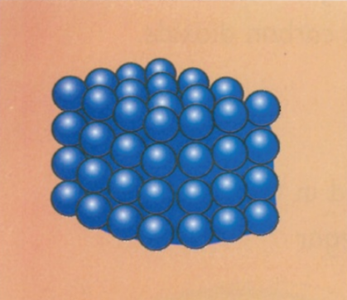
|
Activity 3.2 (The particle game)
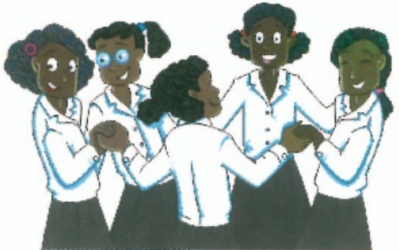
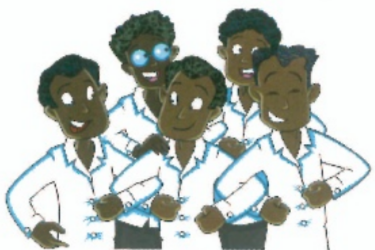
Divide into groups. Imagine that each person in your group is a particle in a solid, a liquid or a gas. Look at the pictures to see what to do.
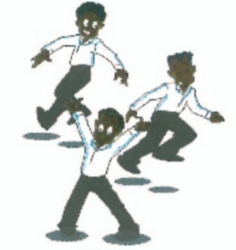
|
|
|
Try to shake from side to side. What do you notice?
Try to move closer together or further apart. What do you notice?
Try to change the shape of your group. What do you notice?
Now change group and repeat the activity.
Questions
1) Compare what happened when you tried to shake as solids, liquids and gases.
2) What happened when you tried to move closer together in each case?
3) What happened when you tried to change the shape of each of your groups?